Customer
What the load requires
- Quote requirements
- Accessorials
- Insurance requirements
- Load type and weight
- Full truckload / LTL
- Temperature requirements
 3PL LogisticsCarrier Matching
A ranked lead is not a final decision.
I designed the broker-facing experience around LLM-based carrier recommendations. The ranking narrowed the search; brokers still needed customer requirements, carrier capabilities, and relationship context to decide whom to contact.

01 / THE KNOWLEDGE PROBLEM
Recorded information could identify promising carriers, but important context remained in notes, emails, conversations, and brokers’ experience. I focused the interface on bringing that knowledge closer to the shortlist so brokers could evaluate a recommendation in context.
What the load requires

What the carrier can provide

What experience had taught the team
A director developed the LLM-based matching algorithm. I designed the broker-facing recommendation, comparison, and decision-support experience. The three information groups show what brokers needed to consider; they do not imply that every item was an automated model input.
02 / THE DESIGN
I brought ranked recommendations and the surrounding operational context into the broker’s working view. The design supported reviewing candidates, comparing relevant information, and deciding which carrier to contact first.
Customer requirements · Equipment · Availability · Broker context
| Compare | Priority | Carrier | Equipment | Availability | Commercial | Context to check | Review |
|---|---|---|---|---|---|---|---|
| 01 | Candidate ARanked lead | Reefer | Confirm | Review quote | Recorded fitVerify recent history | ||
| 02 | Candidate BAlternative lead | Reefer | Confirm | Review quote | Review notesBroker has newer context | ||
| 03 | Candidate CFurther option | Confirm equipment | Check capacity | Review quote | Follow upOperating coverage | ||
| 04 | Candidate DFurther option | Reefer | Confirm | Review quote | Recent noteVerify relationship status |
Swipe the table sideways to inspect availability, commercial terms, and broker context.
Select two carriers to compare equipment, availability, commercial information, and broker context before choosing whom to contact.
A suitable carrier must meet the load’s requirements, but current availability and recent relationship information can still change the order of outreach.
The historical LoadRunner interface presented ranked carriers alongside rates, offer history, and representative information.
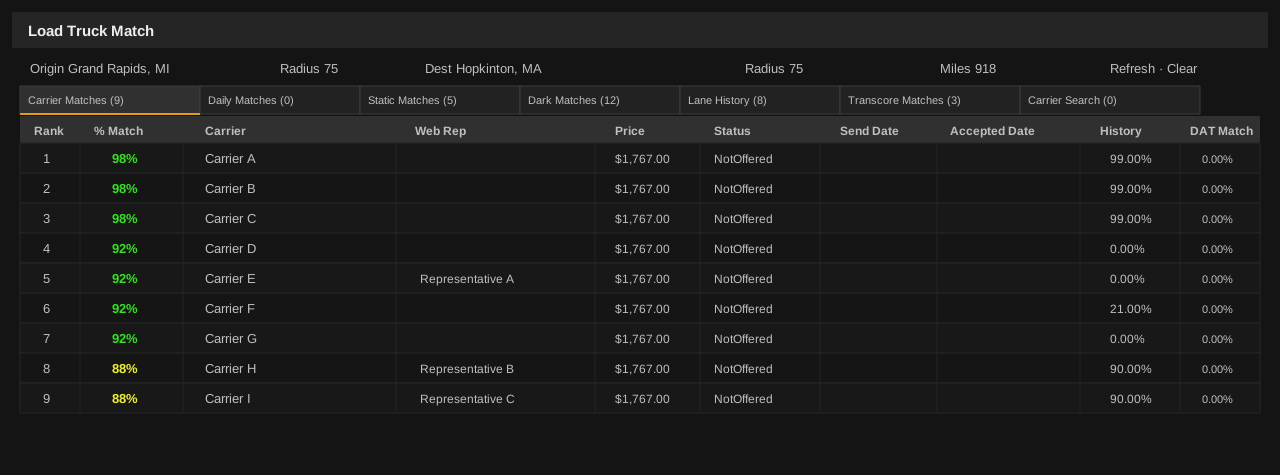
The design treated ranking as a starting point for review. Requirements, capabilities, and relationship context helped brokers assess the recommendation while retaining responsibility for the next call.
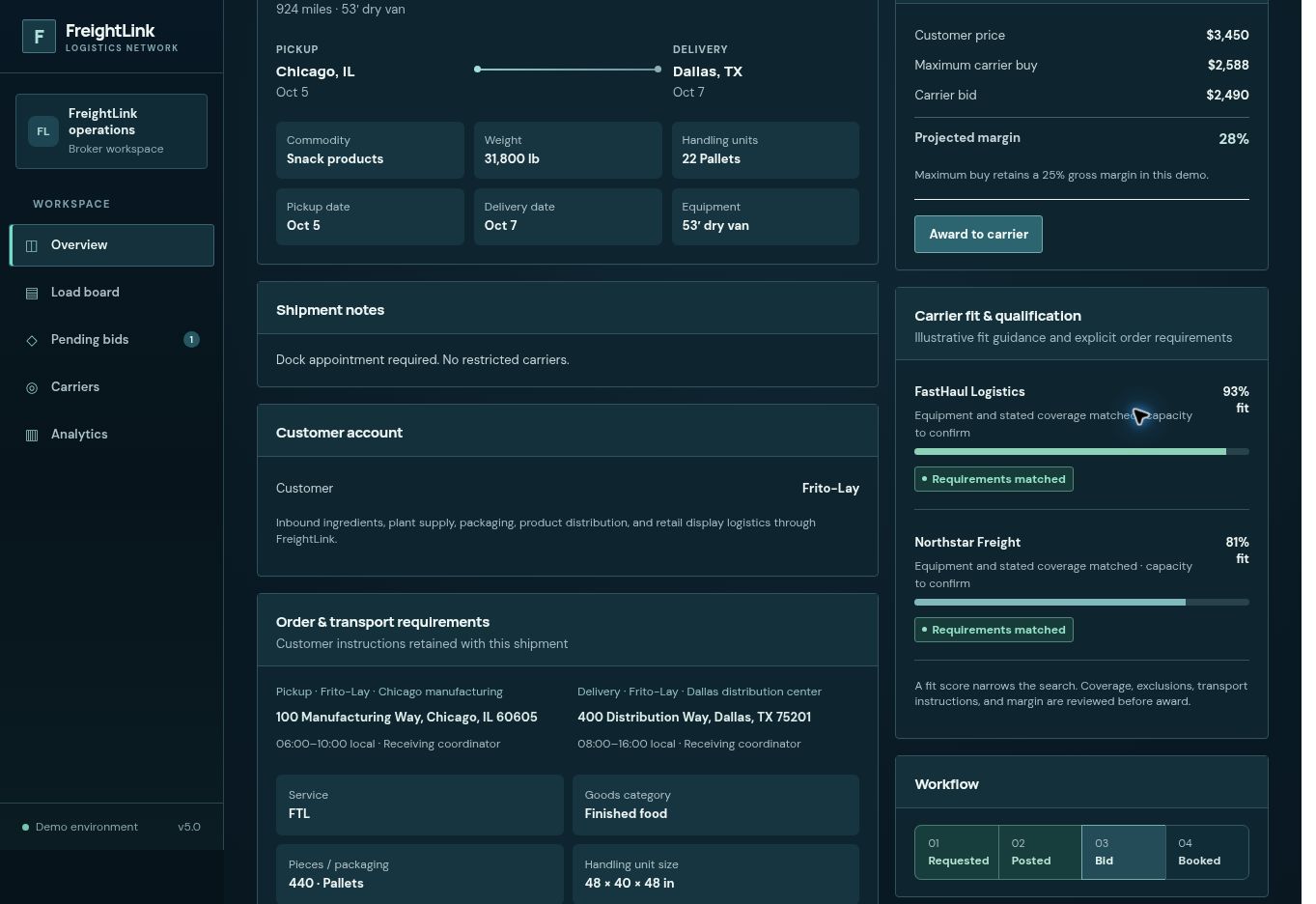
LATER EXPLORATION · FREIGHTLINK
FreightLink extends this decision model by separating required eligibility, relative fit, and information that still needs broker confirmation.