Different workers needed the same signal to mean the same thing.
Field research in Southern California considered workers using English as a second language, Deaf and hard-of-hearing employees, and people moving between physically demanding tasks. Signals needed to be recognizable across the floor and consistent through shift handoffs.
The gap was between a worker noticing a problem and the team knowing how to respond.
I investigated how a request could communicate the help needed, identify the workstation, and remain visible to the people responsible for responding.
A worker’s request could be missed across the floor.
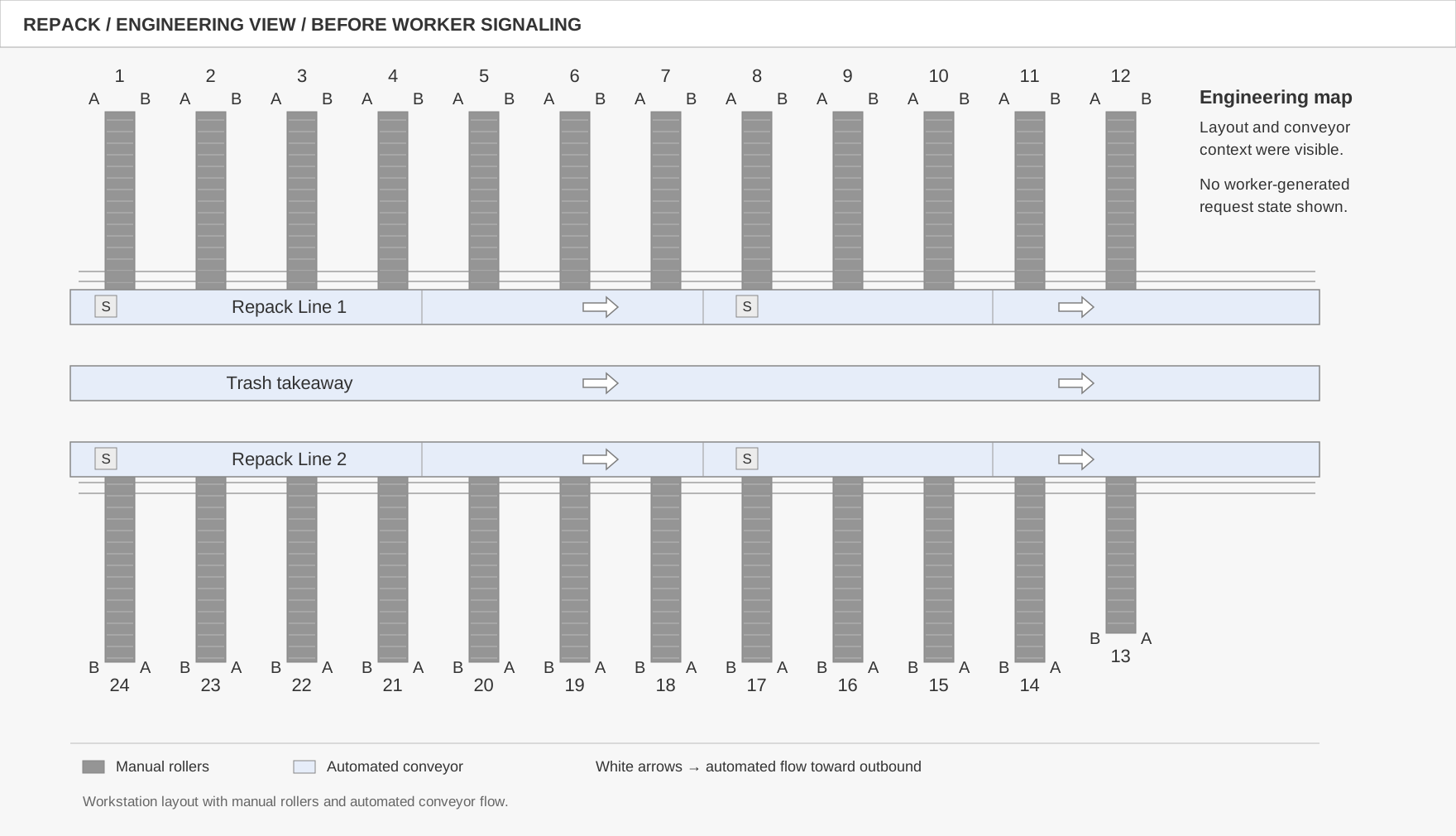
Machine views showed equipment conditions, but not when a person at a Repack station needed help. I worked with site and HQ teams to connect worker-generated requests to a shared response view.
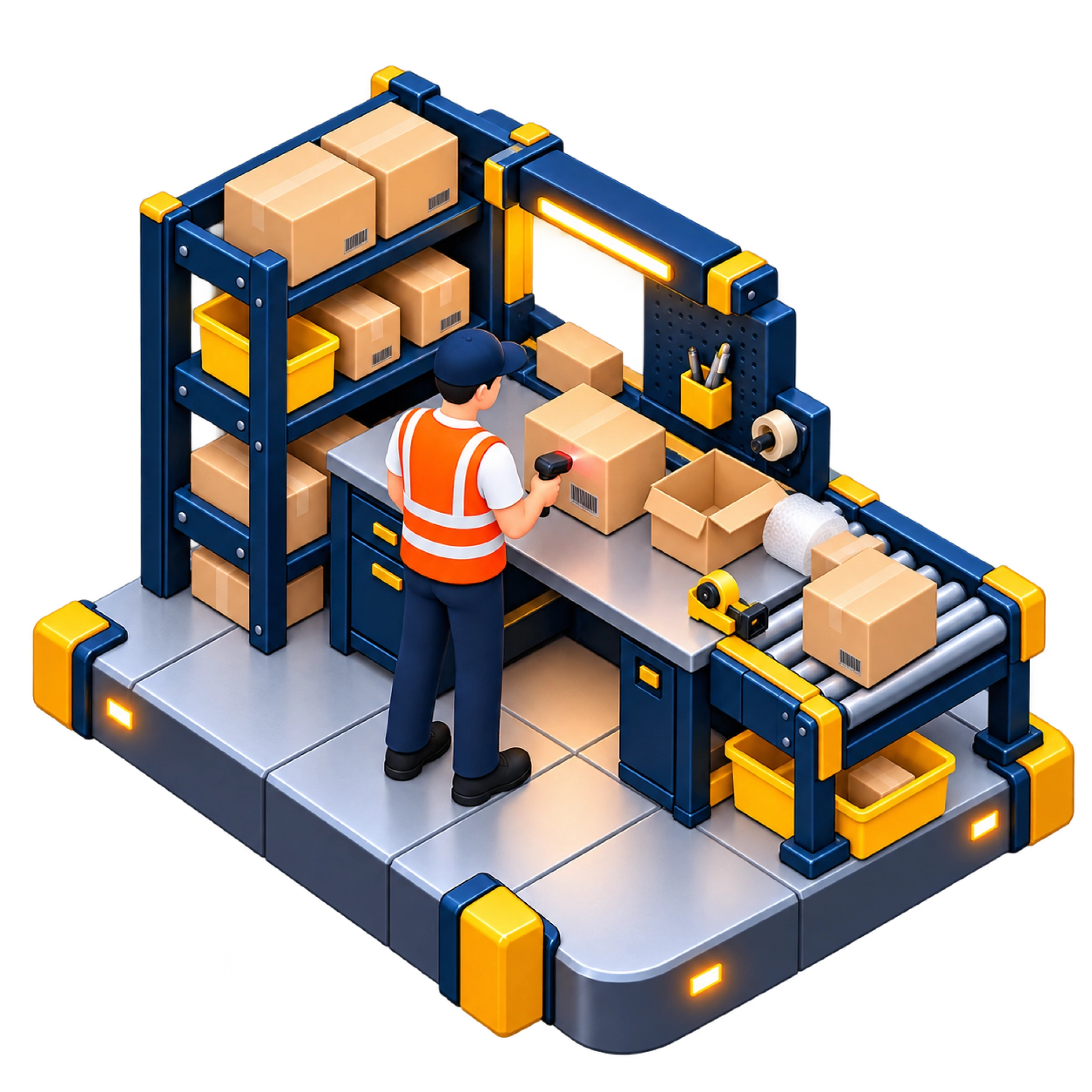
A worker could recognize an incomplete order or another problem that equipment telemetry did not capture. Getting help depended on attracting a responder’s attention, with no shared view of the waiting request.
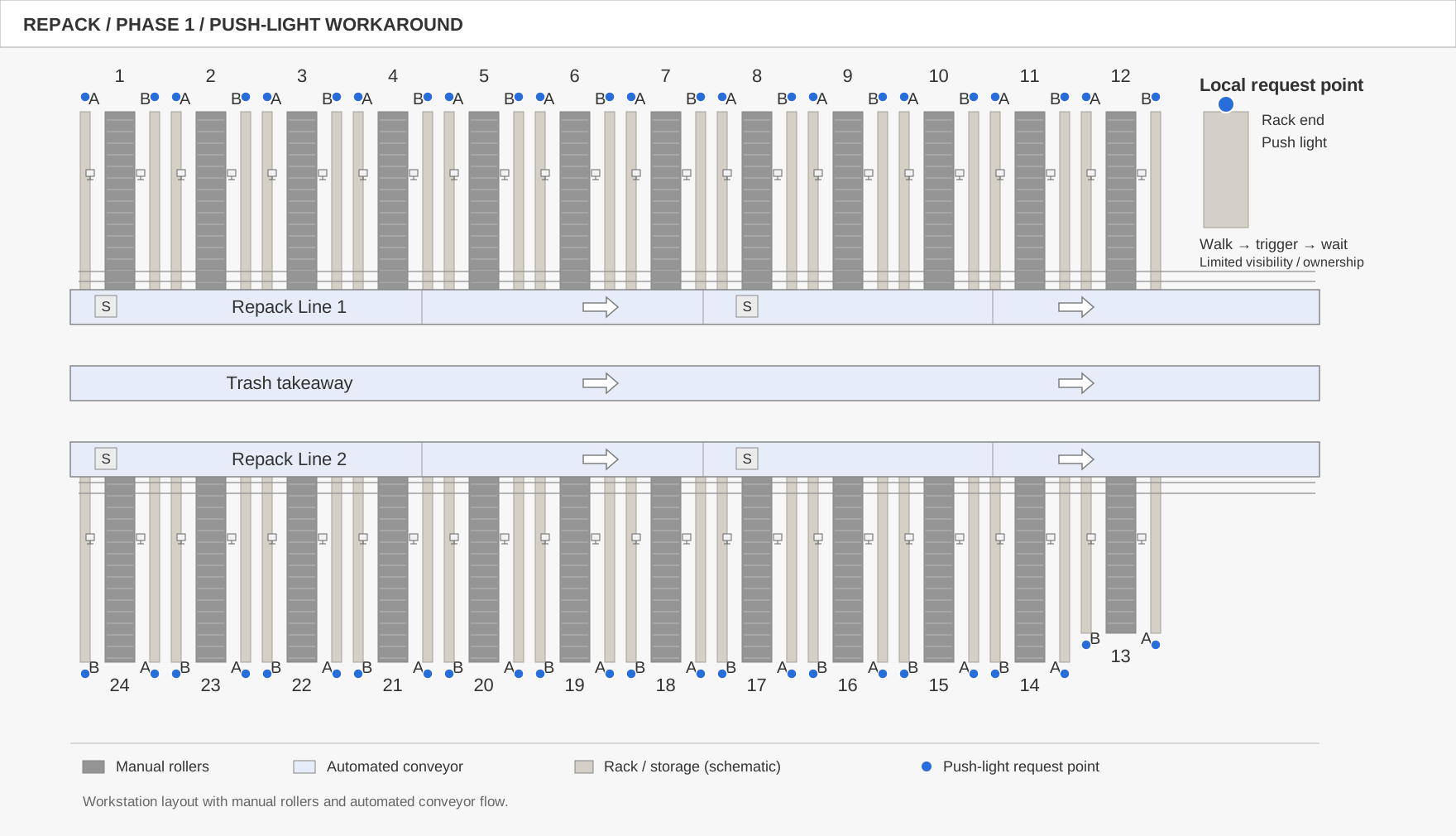
The site introduced push lights so workers could request help from their stations. The request became visible locally, but distance and placement made it difficult to recognize across the floor.
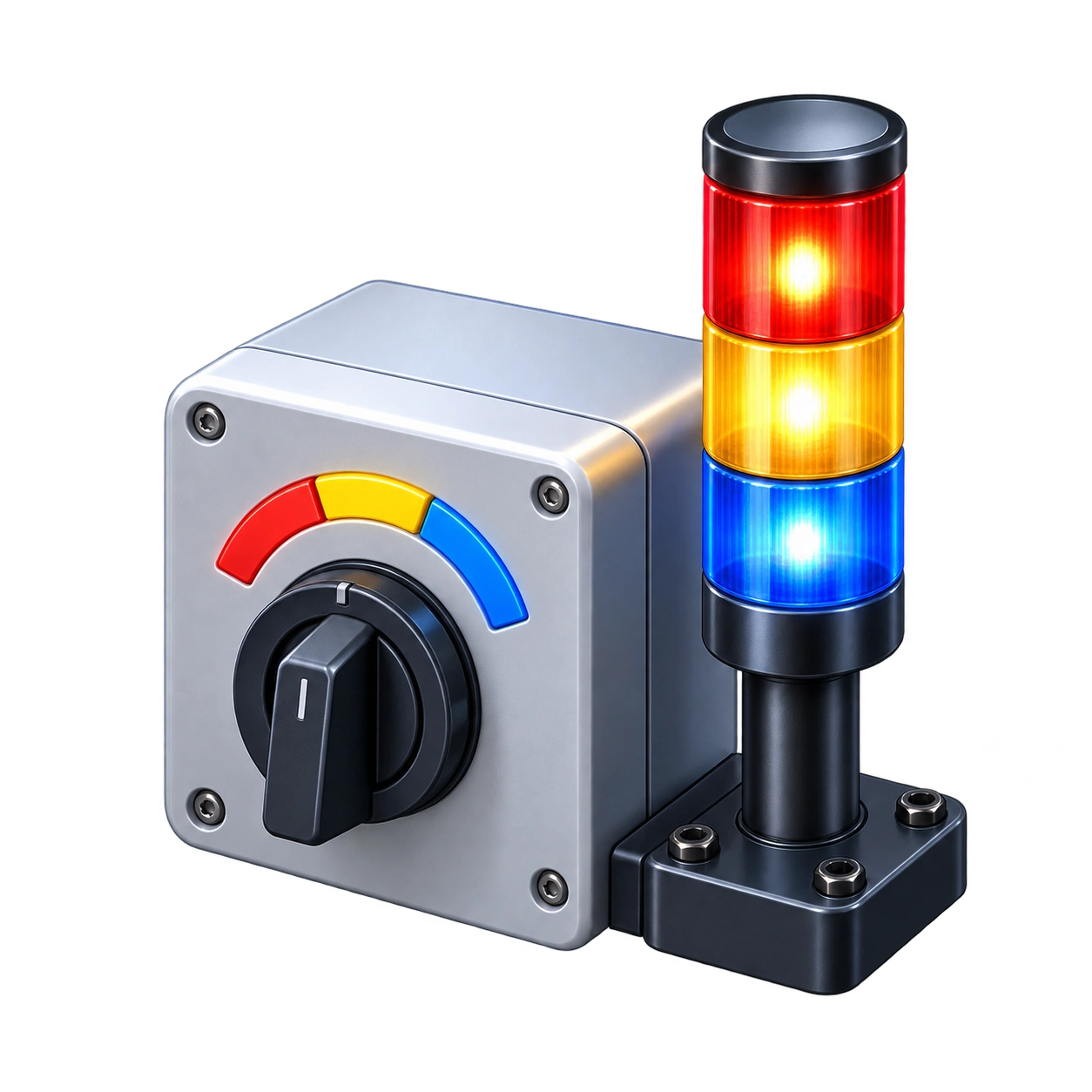
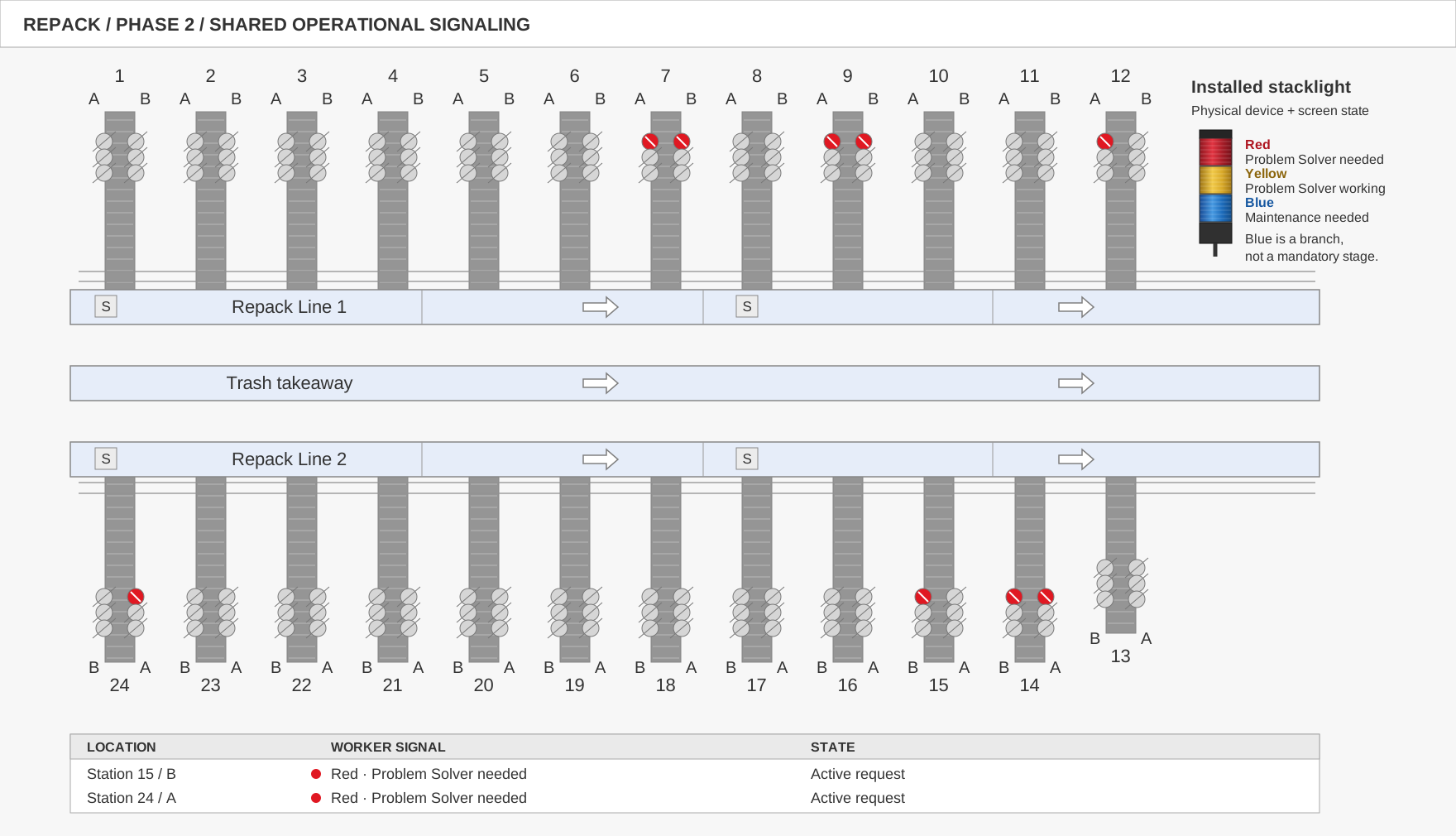
Worker-controlled stacklights connected requests to identifiable A/B workstation locations. The shared Repack view showed where help was needed and how long signals had been active, helping responders locate and prioritize requests.
From a workstation signal to response and review.
I designed the shared Live Repack view, Work Panel, and Historical Audit to connect requests across 24 A/B positions—up to 48 workstations—and support both immediate response and later investigation.
Work Panel
Work Panel · active requestsOldest first · claim visibility
The Work Panel organized active requests from oldest to newest, showed elapsed time, and made claim status visible. Optional blue Maintenance requests entered the Engineering queue directly, reducing dependence on telephone relays.
Historical Audit
Shift / dateLight onLight offColorClaimed by
Shift summaries · total requests · counts by color · cumulative active time
Review the shift without running a report.
Repeated requests for audit trails exposed a gap between retrieving activity through a facility’s Ignition Gateway and examining it directly in Jetson. I designed a lightweight history view for finding individual signal events and comparing activity across shifts.
Records showed when each color turned on and off and who claimed the task. Shift summaries highlighted signal frequency and cumulative active time, leaving interpretation with shift and operations managers.
Installed and tested across three sites.
The complete Repack experience—including physical signaling, shared Live Repack visibility, the Work Panel, and Historical Audit—was implemented and tested across three sites.
Where the signal pattern could extend.
Repack deliberately used three of the five available light colors to avoid confusing workers. Other operating areas might justify four or five if each additional color communicates a different condition and next action.
Implemented decision
Three actionable colors were enough for Repack.
Red requested a Problem Solver, yellow showed active work, and optional blue requested Maintenance. White and green were removed because they did not change the next action.
Vendor defaults
Five available colors
Available colors included states that did not require a new action.
Designed signal language
Three actionable states
Red Problem Solver neededYellow Actively workingBlue Maintenance needed (optional)
Design question
Reduce ambiguity: an extra color only helps when it changes what someone does next.
Installed and tested in Repack; specific configuration described here.
Possible extension
Receiving could require different exceptions to be recognized.
Flag freight exceptions without searching for a lead. Different categories may involve different responders or follow-up steps.
Design question
Would an additional signal represent a different accountable response, rather than another label for the same request?
Potential extension only. This is a design question, not an implemented configuration.
Possible extension
Distance and task interruption may change the right signal set.
Surface blocked tasks across an aisle. Responders would need an identifiable aisle or workstation, not only a color.
Design question
Would another color make the response clearer, given the physical location and task?
Potential extension only. This is a design question, not an implemented configuration.
Possible extension
Sortation might need to distinguish types of disruption.
Give worker-spotted disruptions a visible route to a responsible team. The meaning of each signal should connect to the response it triggers.
Design question
Would extra states distinguish meaningfully different conditions for operations and Engineering?
Potential extension only. This is a design question, not an implemented configuration.
Possible extension
Dock handoffs may need different response ownership.
Communicate loading needs across the dock. A signal would need to be understood at the right dock or handoff point.
Design question
Would an additional color simplify a handoff or merely add another code to remember?
Potential extension only. This is a design question, not an implemented configuration.
Smarter doesn’t always mean more automatic. Sometimes smart means efficient.