

TARGET SMART WAREHOUSE

One network.Different operating realities.

Designing Jetson, an operational platform that connects warehouse equipment, data, and people across a national network.

Minneapolis headquarters
1
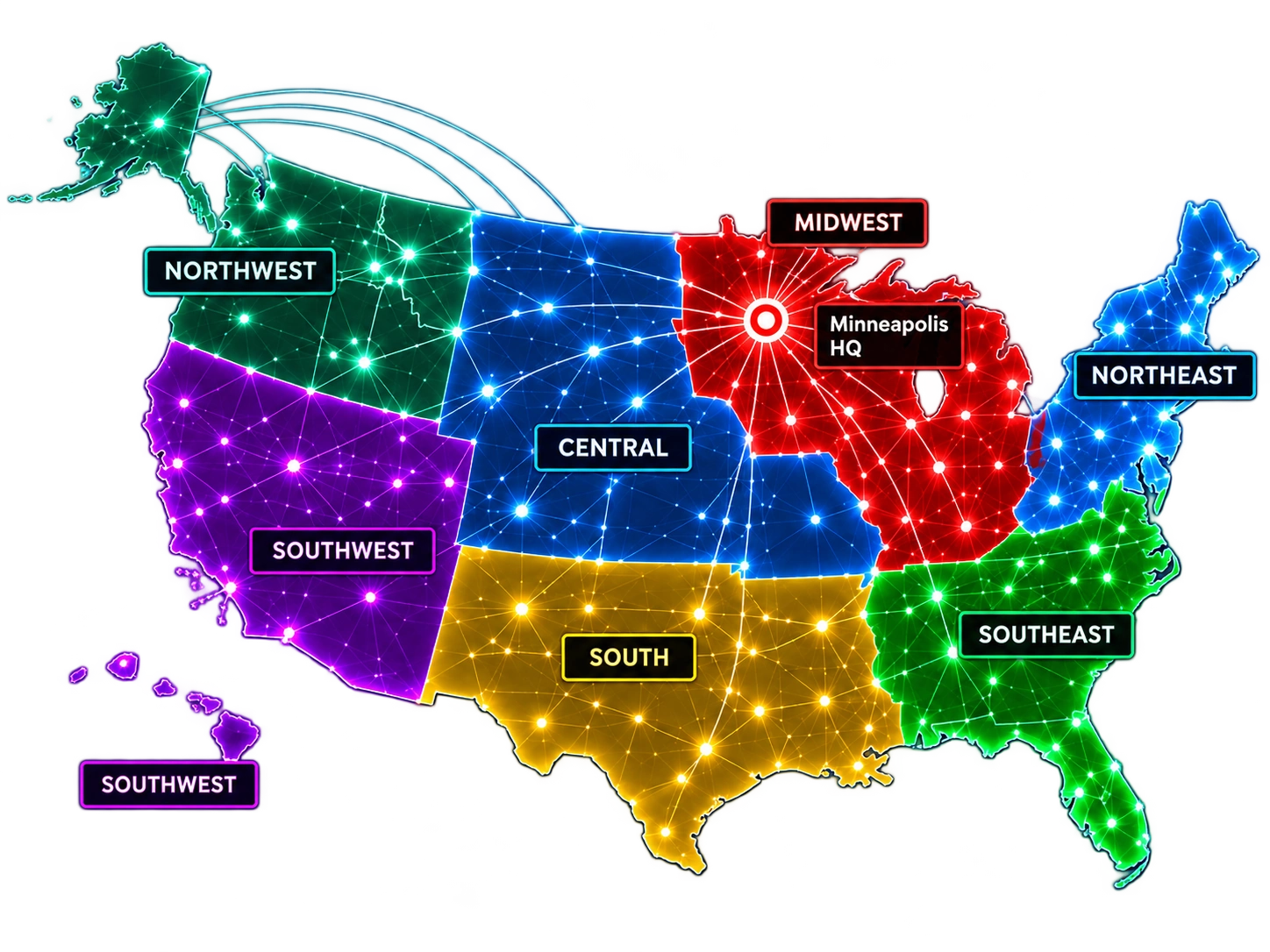
Supply-chain regions
7
Warehouses across the network
50+
Facility types and configurations
8+
Illustrated United States supply-chain regions with a hub in Minneapolis and connections across the network.

Role & Contributions

Sole UX designer for Automation Intelligence.

Jetson supported Target’s middle-mile operations across more than 50 warehouses. Each facility brought its own combination of automation, equipment, vendors, workflows, and local needs.

As the sole UX designer on Jetson’s core team, I worked with Product, Engineering, and Operations to understand those differences, identify recurring needs, and shape tools that could work locally while supporting a more consistent platform across the network.

Warehouse Systems & People

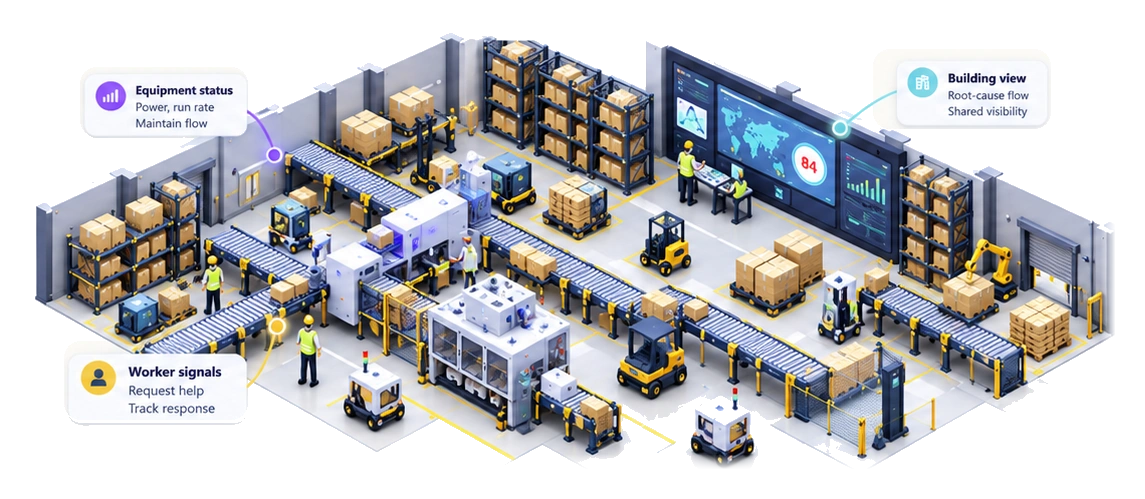
One warehouse, multiple connected systems. Equipment, software, and people share the same physical environment but operate under different constraints.

Wide isometric view of the warehouse: conveyors, storage, robots, engineers, equipment status and building-level telemetry.
The same building, viewed through three connected lenses.

Commissioning, activation & go-live

Commissioning verified installed automation on-site, checking physical equipment responses against software signals and Jetson interface states. Activation was also a named rollout phase and team, with a scheduled go-live date to meet.

  1. 01Set test conditions

    Define scenarios and expected equipment behavior.

  2. 02Run equipment tests

    Observe how conveyors and automation respond on-site.

  3. 03Check the interface

    Verify that displayed states and signals match what happens.

  4. 04Resolve & retest

    Document issues, correct gaps, and check again.

Activation & go-live

The Activation team worked through the Activation phase toward a scheduled go-live date. Commissioning findings, interface fixes, and operational readiness had to align with that milestone.

Equipment

Conveyors, sortation, storage, robotics, and automated assets physically move material through the building. Each facility uses a different combination.

  • Inbound → processing → outbound
  • Equipment states and dependencies
  • Real behavior observed during commissioning

Case Studies & Design Decisions

Select a case study to explore the problem, field perspective, investigation, and design response.

“I made my own Excel spreadsheet to consolidate the 20 apps I have to access for information.”

Operations

Investigation

Sites differed in equipment configurations, workflows, and local solutions. A feature useful in one building could be unsuitable elsewhere.

Design response

Separate shared operating concepts from site-specific rules, while giving proven local solutions a path toward supported capabilities.

See the Material Flow case study

Across Material Flow, Signal Visibility, and OEE & Learning, the challenge wasn't simply making more operational data available. It was connecting equipment behavior, local practices, and system information so different teams could make sense of the same environment. Each investigation approached that challenge differently: reconciling shared and site-specific needs, making physical signals actionable, and turning performance metrics into understandable decisions. Together, they demonstrate an approach to warehouse automation grounded in how people actually operate, maintain, and improve these systems.

Tools & Field Validation

I worked across design tools, industrial automation software, technical documentation, delivery systems, and site validation.

Industrial automation

IgnitionHMI / SCADATelemetry

Ignition Gold Certified 2023–2026, working within the constraints of operational software and equipment signals.

Design and prototyping

FigmaIllustratorPhotoshop

Modeling workflows and building reusable interaction patterns.

Systems investigation

MiroCAD / PlansSpecs

Mapping dependencies, equipment behavior, and exceptions.

Delivery and coordination

JiraConfluenceSmartsheet

Collaborating with engineering and teams responsible for commissioning.

Research and validation

QualtricsExcelTest plans

Turning observations, surveys, and field tests into product decisions.

Emerging technology

ChatGPTEvaluationPrototypes

Exploring where AI could support complex, role-aware operational workflows.